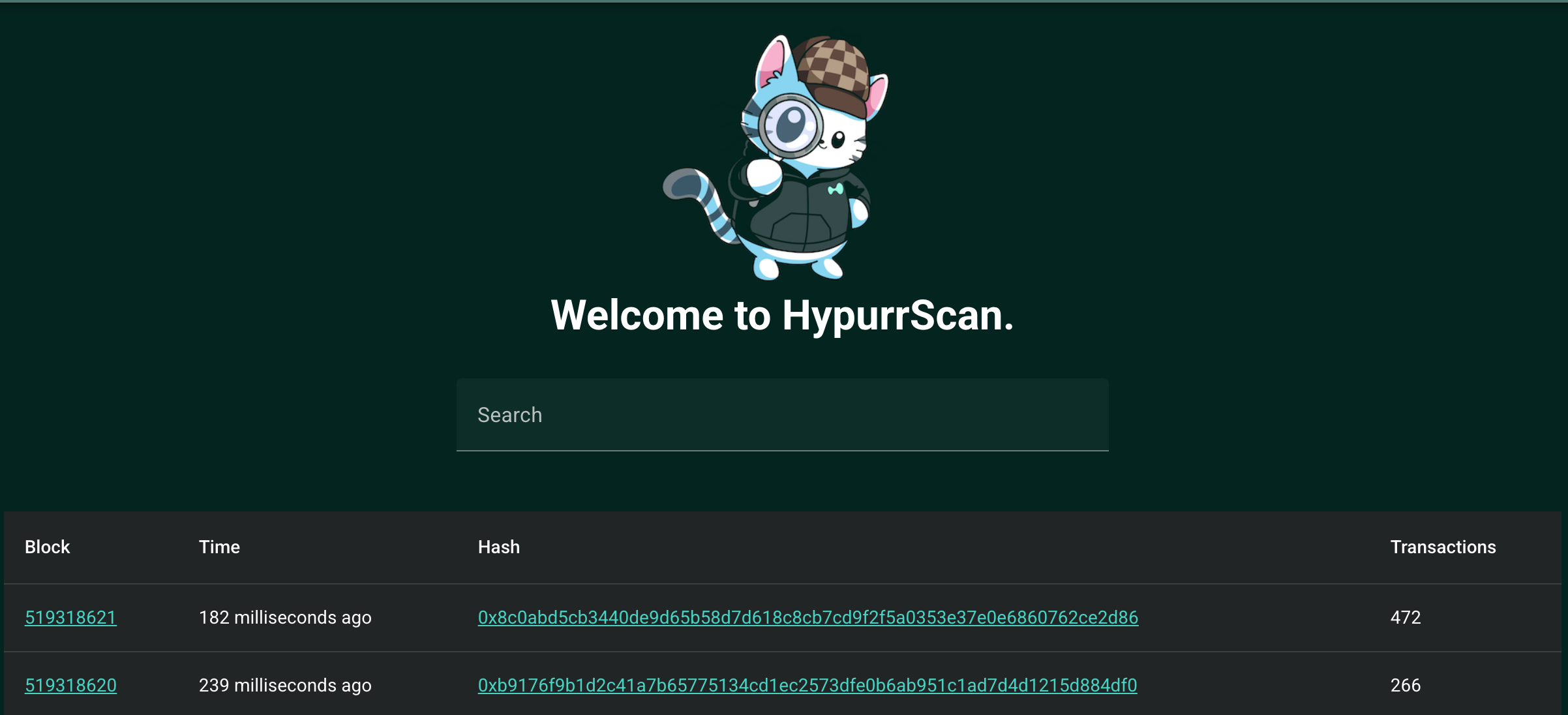
HypurrScan is a comprehensive, community-built blockchain explorer and analytics platform designed specifically for the Hyperliquid ecosystem. It serves as the primary visual terminal and registry ledger for Hyperliquid users, allowing them to track wallet portfolios, examine decentralized trading positions, analyze real-time perpetual swap data, and audit smart contract interactions.
By indexing raw cryptographic data directly from the network, HypurrScan translates complex hexadecimal blockchain code into a searchable, human-readable web interface. It functions similarly to how Etherscan serves Ethereum or how Solscan serves Solana, acting as an essential tool for maintaining transparency, security, and open data access across the platform.
Part 1: Contextualizing HypurrScan within Hyperliquid
To understand the necessity and functional scope of HypurrScan, it is essential to first understand the unique infrastructure of Hyperliquid. Hyperliquid is a high-performance decentralized perpetual exchange (DEX) operating on its own dedicated Layer-1 app-chain built using Tendermint consensus mechanics.
Furthermore, Hyperliquid features a fully integrated Hyperliquid EVM (Ethereum Virtual Machine). This architecture allows the platform to natively handle both high-speed, high-throughput order book trading for perpetual contracts and standard Web3 smart contracts or custom token deployments.
Because the ecosystem processes millions of transactions, orders, liquidations, and token deployments daily, users require a robust indexing tool to audit network health and verify account actions. HypurrScan was developed as a community-driven response to this need, delivering deep data granularity that basic trading dashboards cannot provide.
Part 2: Structural Architecture & How it Works
HypurrScan functions through a sophisticated multi-layered data pipeline that continuously mirrors the state of the public ledger.
┌────────────────────────────────────────────────────────┐
│ Hyperliquid L1 / EVM Blockchain │
└───────────────────────────┬────────────────────────────┘
│ (Raw Block Data Stream)
▼
┌────────────────────────────────────────────────────────┐
│ HypurrScan Indexing Engine │
└───────────────────────────┬────────────────────────────┘
│ (Structured Database Sync)
▼
┌────────────────────────────────────────────────────────┐
│ HypurrScan User Interface │
│ (Search: Wallets, Transactions, Perpetual Trades) │
└────────────────────────────────────────────────────────┘
Data Ingestion (Nodes & RPCs): The backend of HypurrScan connects directly to Hyperliquid network validator nodes via Remote Procedure Call (RPC) interfaces. Every time a validator creates a new block, HypurrScan receives a raw stream of data.
Parsing and Indexing: Raw blockchain data is highly disorganized and low-level. HypurrScan's indexing engine separates standard token transfers, perpetual order placements, margin adjustments, liquidations, and custom smart contract executions.
Database Storage: The parsed data is structured into searchable databases, allowing the web interface to serve user queries instantly without causing processing lag on the live blockchain network.
Part 3: Core Features & Functionality
The platform interface is divided into several main operational sections, each catering to different types of on-chain analysis:
1. Comprehensive Portfolio and Account Tracking
Every user profile or trading wallet on Hyperliquid has a dedicated page on HypurrScan. By pasting an active public wallet address or a registered username into the search bar, anyone can audit a public profile:
Asset Balances: View total net worth split across margin deposits, spot tokens, and idle cash reserves.
Live Perpetual Positions: Track a wallet's open long or short leverage positions, including entry prices, current unrealized profit and loss (PnL), and estimated liquidation barriers.
Historical Activity: Audit a chronological ledger of all historic trades, account deposits, and cross-chain withdrawals.
2. Deep Perpetual Market Analytics
For derivatives traders, HypurrScan functions as an independent verification layer to confirm order book execution safety.
Funding Rate Trackers: View historical and predicted funding fee schedules for individual perpetual pairings.
Liquidation Feeds: Track forced liquidations across the network in real time. This metric is a crucial gauge for measuring localized market cascades and volatile trading risks.
Trade Order Matching: Verify that a perpetual order was executed at the correct price point by inspecting block time records.
3. Full Hyperliquid EVM Support
Because Hyperliquid supports EVM compatibility, it acts as a home for custom decentralized applications and user-minted tokens. HypurrScan serves as a complete Web3 explorer for this layer:
Transaction Hash Inquiries: Enter a transaction ID to see gas fee consumption, execution success status, and block inclusion heights.
Smart Contract Auditing: Read and write to verified smart contracts directly through the browser interface. Developers can cross-examine contract bytecode to ensure deployments match intention.
Token Registries: Track custom token distributions, total circulating supplies, top holders, and real-time transaction velocities.
4. Vault and Vault-Leader Tracking
Hyperliquid heavily utilizes decentralized vault mechanisms where users can copy-trade algorithmic strategies or major market makers. HypurrScan provides comprehensive breakdowns of these vaults, tracking historical performance yields, total value locked (TVL), and participant ownership allocations.
Part 4: Strategic Advantages of Using HypurrScan
Analytical Feature
Standard Interface Usage
HypurrScan Advanced Usage
Wallet Transparency
Only view your own active connected wallet
View and analyze any public wallet or competitor portfolio
Historical Data Depth
Limited to recent trading records
Access deep historical ledgers dating back to block zero
Smart Contract Audits
Hidden behind frontend app designs
Access and read the underlying code execution parameters
System Diagnostics
Rely on simple status page notifications
Inspect block production intervals and validator consensus health
Part 5: Operational Safety and Analytical Best Practices
While blockchain explorers are primarily read-only tools that do not natively handle or manage your private keys, keeping specific safety guidelines in mind prevents exposure to common Web3 vulnerabilities:
Verify Official Domains: Malicious actors regularly create replica explorer interfaces via sponsored advertising channels to phish users. Always ensure you are accessing the verified network terminal at HypurrScan.io.
Isolate Public Identifiers: Although blockchain transactions are public, searching your personal wallet address on public computers can compromise your operational privacy. Use private browsing modes when inspecting confidential wealth portfolios.
Avoid Unknown Token Interactions: If an anonymous custom token suddenly appears as an airdrop inside your wallet address on HypurrScan, avoid interacting with it or attempting to approve it via external decentralized sites. These tokens frequently use malicious smart contracts designed to drain wallet balances upon signature approval.
Use Hardware Read-Only Formats: You do not need to connect an active Web3 wallet or enter seed phrases to search for information on HypurrScan. Keep your hot wallets disconnected from data exploration portals to maintain maximum defense-in-depth security.
HypurrScan is a fundamental piece of open infrastructure within the Hyperliquid landscape. By offering public access to raw data, it eliminates informational asymmetry and allows everyday retail participants to track large whale movements, verify automated trades, and explore new EVM project launches safely. As the Hyperliquid ecosystem expands its multi-chain capabilities, tools like HypurrScan remain absolutely paramount for ensuring decentralization and on-chain accountability.

Website Software